


Send Message
Privacy statement: Your privacy is very important to Us. Our company promises not to disclose your personal information to any external company with out your explicit permission.

Shenzhen Mellume Technology Company Limited


Titanium optical frames represent the pinnacle of eyewear craftsmanship, combining exceptional durability with an ultra-lightweight feel that sets them apart from conventional materials. Unlike standard metal or plastic frames, pure titanium and beta-titanium alloys offer a unique combination of strength-to-weight ratio, corrosion resistance, and hypoallergenic properties that make them ideal for daily wear.
For professional buyers sourcing high-end eyewear, understanding what makes titanium frames distinct is crucial. These frames are manufactured using advanced metallurgical processes that preserve titanium's natural properties while allowing for intricate design possibilities. The result is eyewear that maintains its structural integrity over years of use while providing unmatched comfort for consumers who prioritize both aesthetics and performance.
The growing demand for premium eyewear solutions has positioned titanium frames as a key differentiator in the competitive optical market. Buyers seeking to capture the luxury segment must understand the technical specifications, manufacturing complexities, and quality indicators that define genuine titanium eyewear versus inferior alternatives.
When evaluating titanium optical frames for wholesale procurement, buyers should consider factors such as material grade, hinge construction, surface treatment quality, and compliance with international eyewear standards. Our comprehensive understanding of these elements enables us to deliver products that meet the rigorous demands of global optical retailers and brand owners.
With over two decades of specialized experience in titanium eyewear production, Shenzhen Mellume Technology has established itself as a trusted partner for more than 500 eyewear brands across 60+ countries. Our 15,000 square meter facility in Shenzhen represents one of the most advanced titanium frame manufacturing operations in Asia, equipped with state-of-the-art CNC machining centers, precision welding equipment, and automated surface treatment lines.
Our commitment to quality extends beyond manufacturing capabilities. We maintain certified management systems including ISO 9001 for quality management, ISO 14001 for environmental responsibility, and BSCI for social compliance. Additionally, our products carry CE, FDA, RoHS, and TUV certifications, ensuring full regulatory compliance for markets worldwide.
For procurement professionals, this means reduced risk, consistent supply reliability, and access to a partner who understands the complex requirements of international eyewear distribution. Every pair of titanium frames undergoes inspection by our dedicated 15-person quality control team before shipment, guaranteeing that your customers receive products that meet exact specifications.
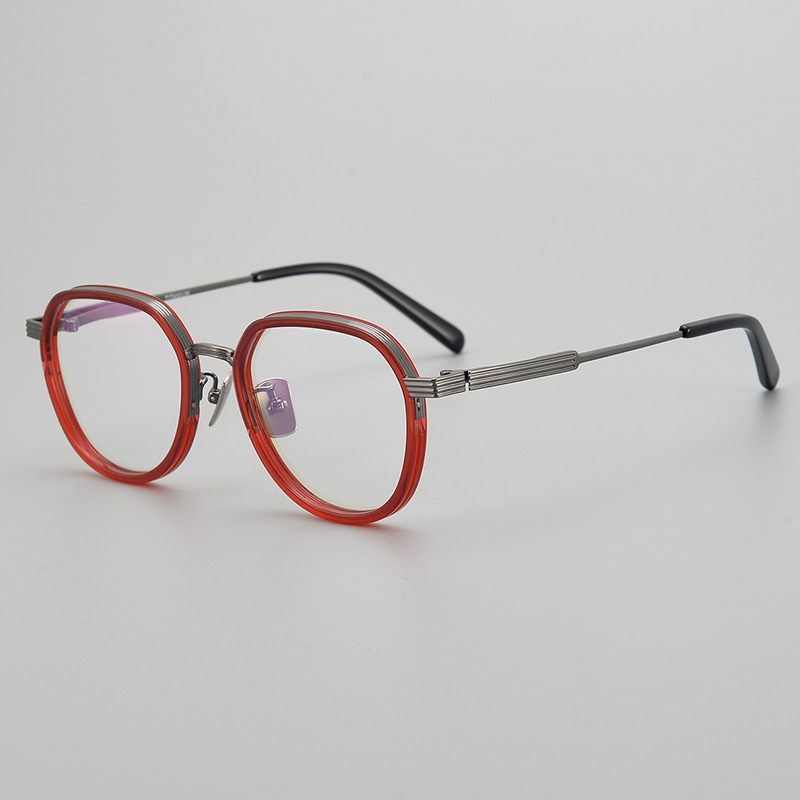
We source only certified titanium materials from verified suppliers, ensuring each batch meets strict purity and mechanical property standards. Our raw material verification process includes spectrometric analysis and tensile testing to confirm compliance with international eyewear material specifications.
Our CNC machining centers achieve tolerances within 0.05mm for critical frame dimensions, ensuring perfect hinge alignment, consistent bridge fit, and uniform temple curvature across all production batches. This precision engineering capability allows us to produce complex titanium designs that would be impossible with traditional manufacturing methods.
Through advanced PVD coating, electroplating, and polishing processes, we deliver titanium frames with superior finish quality and color consistency. Our surface treatment protocols ensure excellent adhesion, scratch resistance, and corrosion protection that withstands real-world usage conditions including exposure to sweat, cosmetics, and cleaning solutions.
Every titanium frame undergoes comprehensive testing including hinge durability cycles, drop resistance, salt spray corrosion tests, and skin contact safety assessments. Our quality benchmarks exceed EN ISO 12387-1:2013 international eyewear standards, providing buyers with confidence in product reliability and regulatory compliance.
Our quality assurance framework for titanium optical frames provides buyers with complete traceability from raw material intake through final packaging. Each production lot maintains detailed documentation including material certificates, test reports, and inspection records, facilitating smooth customs clearance and regulatory audits in destination markets.
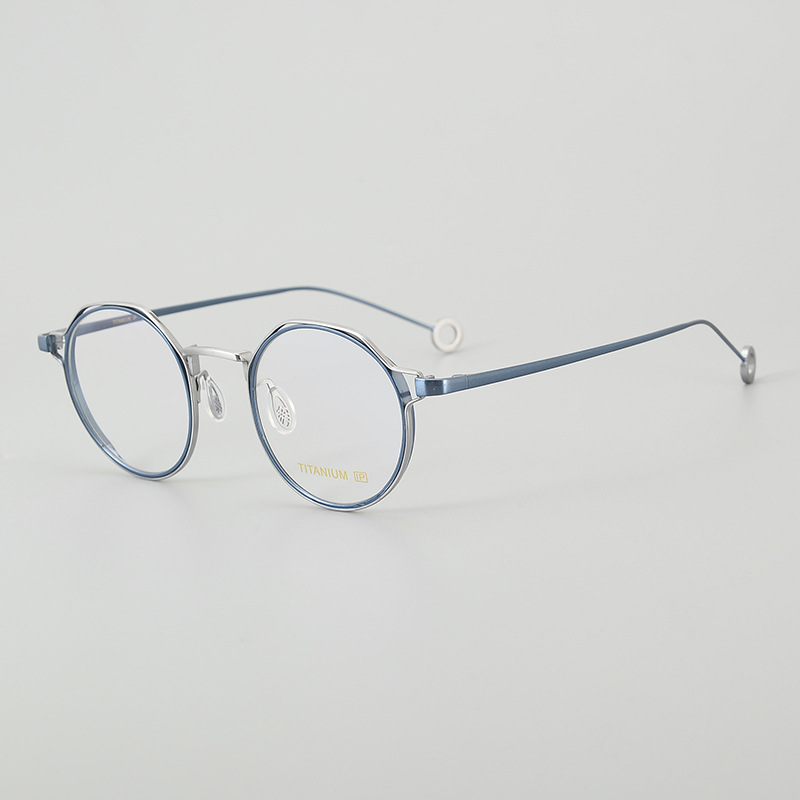
Selecting the right titanium frame manufacturer requires careful evaluation of multiple factors beyond basic pricing. For buyers entering the premium eyewear market or expanding their titanium frame offerings, understanding these critical selection criteria ensures long-term partnership success and product excellence.
Evaluate whether potential suppliers possess in-house titanium processing capabilities rather than outsourcing critical steps. In-house CNC machining, welding, and surface treatment facilities indicate true manufacturing expertise and enable better quality control, faster iteration cycles, and more competitive pricing structures.
Verify that your supplier holds relevant international certifications including ISO 9001, ISO 14001, BSCI, CE, FDA, RoHS, and TUV. These certifications demonstrate compliance with quality management, environmental standards, and product safety requirements essential for importing eyewear into regulated markets such as the EU, US, and Japan.
Assess the supplier's ability to support both light customization for emerging brands and full OEM/ODM programs for established labels. Look for manufacturers offering flexible MOQ tiers, rapid sampling capabilities, and comprehensive design support from concept through mass production.
Material Grade Verification: Confirm whether frames use pure titanium or beta-titanium, and request material test reports specifying alloy composition and mechanical properties.
Hinge Construction Quality: Evaluate spring hinge mechanisms, barrel hinge durability, and overall joint strength. High-quality titanium hinges should withstand thousands of open-close cycles without deformation.
Surface Finish Consistency: Inspect sample frames for uniform coating application, absence of pinholes or bubbling, and consistent color matching across all frame components.
Weight Specifications: Verify frame weight falls within expected ranges for titanium construction (typically 8-12 grams for full rims), ensuring consumer comfort expectations are met.
MOQ & Lead Time Alignment: Match supplier minimum order quantities and production timelines with your brand's inventory planning and seasonal launch schedules.
Sample Evaluation Process: Request physical samples before committing to production orders. Test fit on multiple face shapes, assess comfort during extended wear, and evaluate build quality hands-on.
Packaging & Branding Options: Confirm availability of custom packaging, logo engraving, lens branding, and retail-ready presentation options that align with your brand identity.
After-Sales Support Structure: Establish clear communication channels, warranty terms, defect resolution procedures, and dedicated account management support before placing initial orders.
Titanium optical frames serve diverse market segments, each with distinct requirements and purchasing considerations. Understanding these applications helps buyers identify opportunities and tailor their procurement strategy accordingly.
Major optical retailers seek titanium frames to offer premium product tiers alongside mid-range offerings. These frames command higher price points, generate improved profit margins, and attract discerning customers willing to invest in long-lasting eyewear solutions.
Emerging designer brands leverage titanium's versatility to create distinctive, fashion-forward frames that stand out in crowded marketplaces. The material's workability enables complex geometries and innovative design expressions that resonate with style-conscious consumers.
Direct-to-consumer eyewear companies benefit from titanium frames' inherent value proposition—lightweight comfort combined with premium perception. These attributes reduce return rates related to comfort complaints and strengthen brand positioning in competitive online markets.
Hypoallergenic properties make titanium frames ideal for patients with sensitive skin, nickel allergies, or dermatological conditions. Medical distributors and specialty opticians increasingly recommend titanium constructions for health-conscious consumers requiring safe, biocompatible eyewear materials.
Many buyers encounter situations where titanium frame quality varies significantly between production runs, leading to customer complaints and brand reputation damage. This inconsistency often stems from suppliers lacking proper material certification processes or switching between titanium grades without notification.
Work with manufacturers who maintain strict material traceability systems and provide batch-specific test reports. Require written confirmation of titanium grade specifications in purchase agreements and conduct incoming quality inspections upon receipt.
Titanium frames with poor surface treatment may exhibit coating peeling, discoloration, or accelerated wear patterns after months of consumer use. This problem is particularly prevalent with low-cost suppliers who cut corners on pre-treatment preparation and coating application processes.
Request salt spray test reports and accelerated aging test data from your supplier. Conduct real-world wear testing on samples before approving production orders. Specify minimum coating thickness requirements and acceptable wear standards in your quality agreements.
Complex titanium frame customization involving specific hinge types, color matching, logo placement, and packaging specifications can lead to misunderstandings between buyers and manufacturers. Poor communication results in samples that don't match expectations and production delays.
Establish detailed technical specification documents with visual references, dimensional drawings, and acceptance criteria before sampling begins. Assign a single point of contact on both sides to streamline communication and ensure requirement clarity throughout the development process.
Building a successful titanium frame supply chain requires partnering with manufacturers who demonstrate proven expertise, reliable capacity, and genuine commitment to quality excellence. Based on industry analysis and buyer feedback patterns, here are key recommendations for selecting your titanium optical frames supplier.
Choose suppliers who control the entire production process internally—from raw material processing through final packaging. In-house CNC machining, welding, surface treatment, and assembly capabilities ensure consistent quality, faster turnaround times, and greater flexibility when addressing design modifications or urgent order adjustments.
Confirm that your titanium frame supplier maintains active ISO 9001, ISO 14001, BSCI, CE, FDA, RoHS, and TUV certifications. These credentials are not merely marketing tools—they represent documented adherence to internationally recognized quality, environmental, and safety standards that protect your business from regulatory risks in target markets.
Ensure your supplier can scale production to match your growth trajectory. A manufacturer capable of handling both small-batch experimental orders and large-volume production runs provides the flexibility needed to test new designs, respond to seasonal demand fluctuations, and support brand expansion without supply chain constraints.
Effective supplier relationships require dedicated support resources. Look for manufacturers assigning a single account manager to coordinate all activities from initial inquiry through delivery completion. This centralized approach reduces communication errors, accelerates response times, and builds the institutional knowledge necessary for long-term partnership success.
Pure titanium offers superior corrosion resistance and hypoallergenic properties, making it ideal for consumers with sensitive skin. Beta-titanium provides enhanced elasticity and spring-back characteristics, allowing for more flexible hinge designs and improved frame durability under repeated stress. Both materials deliver lightweight comfort, but the choice depends on your target market's specific preferences and usage patterns.
We offer flexible minimum order quantity tiers to accommodate different business models. Light customization programs start at 50-100 pieces per design, ideal for startups and seasonal collections. Full OEM/ODM programs with custom mold development typically require 300+ pieces per design. This tiered approach allows buyers at every stage to access premium titanium frame manufacturing without excessive inventory commitments.
Standard sampling turnaround is approximately 7 days from design approval to sample delivery. This rapid prototyping capability enables buyers to evaluate design feasibility, assess quality levels, and make informed production decisions without extended waiting periods. Rush sampling options are available for time-sensitive projects upon request.
Absolutely. Titanium frames are excellent substrates for prescription lenses due to their structural stability, precise dimensioning capabilities, and compatibility with various lens mounting techniques. Our titanium frames support full-rim, semi-rimless, and rimless lens configurations, accommodating everything from single-vision prescriptions to complex progressive lens designs used by optical retailers worldwide.
Our titanium optical frames comply with major international regulatory requirements. Products carry CE marking for European markets, FDA registration for the United States, RoHS compliance for restricted substance limitations, and TUV certification for additional quality assurance. Our factory operates under ISO 9001 quality management and ISO 14001 environmental management systems, with BSCI social compliance certification ensuring ethical manufacturing practices throughout our supply chain.
Yes. Our full OEM/ODM service provides end-to-end design support from initial concept sketch through mass production. Our engineering team handles CAD drafting, prototype development, mold design and fabrication, and iterative refinement until the design meets your exact specifications. This comprehensive approach gives brands complete creative freedom while leveraging our 20 years of titanium manufacturing expertise to ensure producibility and cost efficiency.
Our 15-person dedicated QC team implements multi-stage inspection protocols throughout production. Incoming material verification, in-process dimension checks, surface finish evaluation, and final assembly inspection ensure every frame meets specifications. Statistical process control methods track key quality parameters across batches, enabling early detection and correction of any deviations before they affect finished goods quality.
Tel: 086-755-28650848
Whatsapp: +86 13829903822
Address: Block A Smart park, No.76 BaoHe Avenue, Longgang District, Shenzhen, Guangdong China
Website: https://www.mellumeoptical.com
Privacy statement: Your privacy is very important to Us. Our company promises not to disclose your personal information to any external company with out your explicit permission.
Fill in more information so that we can get in touch with you faster
Privacy statement: Your privacy is very important to Us. Our company promises not to disclose your personal information to any external company with out your explicit permission.