


Send Message
Privacy statement: Your privacy is very important to Us. Our company promises not to disclose your personal information to any external company with out your explicit permission.

Shenzhen Mellume Technology Company Limited


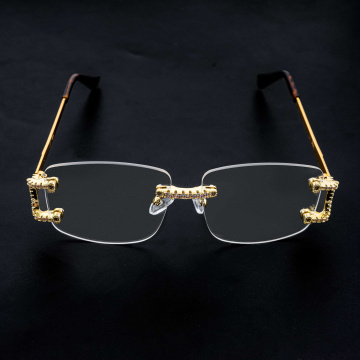
Vintage reading glasses are optical accessories designed to correct presbyopia while evoking the timeless aesthetics of past decades. Unlike modern minimalist frames, these glasses feature distinctive design elements such as thick acetate rims, gold-tone metal wireframes, round or cat-eye silhouettes, and decorative keyhole bridges.
For B2B buyers in the eyewear industry, vintage reading glasses represent a high-margin niche that combines functional vision correction with fashion-forward appeal. These frames cater to consumers who value both clarity and style, making them ideal for boutique optical retailers, independent designer labels, and lifestyle brands looking to expand their eyewear collections.
At Shenzhen Mellume Technology, we specialize in manufacturing premium vintage reading glasses using certified materials from Mazzucchelli, Jimei, Zeiss, and Essilor. Our expertise spans bio-acetate, titanium, metal, TR90, wood, and buffalo horn constructions, allowing us to deliver authentic vintage aesthetics with modern durability standards.
Since 2006, we have served over 500 eyewear brands across 60+ countries. Our two-decade track record means your vintage reading glasses project benefits from refined processes, proven supplier relationships, and deep material knowledge.
Choose between Light Custom (50-100 pcs MOQ, 7-day sampling, no mold fees) or Full OEM/ODM (300+ pcs MOQ, custom mold development). This flexibility supports startups testing seasonal drops and established brands scaling production.
Our factory holds BSCI, ISO 9001, ISO 14001, CE, FDA, RoHS, and TUV certifications. Every pair of vintage reading glasses undergoes inspection by our 15-person QC team before shipment, ensuring consistent quality regardless of order size.
We source certified materials from industry leaders including Mazzucchelli acetate, Jimei cellulose acetate, Zeiss lenses, and Essilor optics. This guarantees superior finish, comfort, and optical clarity for your vintage reading glasses collection.
Our 15,000 m² factory in Longgang District, Shenzhen delivers reliable scalability. Whether you need 50 pieces for a test run or 50,000 for a global launch, our production pipeline maintains consistency and on-time delivery.
Each client receives one dedicated account manager from inquiry through delivery. This single point of contact simplifies communication, reduces errors, and accelerates decision-making throughout your vintage reading glasses sourcing process.
Our manufacturing process for vintage reading glasses is built on precision, consistency, and rigorous quality control at every stage. From raw material intake to final packaging, each step is documented and verified to meet international standards.
All acetate sheets, metal alloys, titanium blanks, and lens substrates arrive with full certification from approved suppliers. We verify material composition, colorfastness, hypoallergenic properties, and mechanical strength before releasing any batch to production.
Whether crafting thick acetate rims through CNC cutting and hand-polishing or forming delicate metal wireframes via welding and plating, our technicians follow standardized work instructions calibrated for vintage aesthetic accuracy. Each frame is checked for symmetry, hinge alignment, and temple curvature.
Lenses from Zeiss and Essilor are mounted with precision edging machines. Diopter accuracy is verified using digital lensometers, and anti-reflective, blue-light filtering, or photochromic coatings are applied according to buyer specifications.
Before any shipment leaves our facility, every pair of vintage reading glasses passes through a multi-point inspection covering surface finish, hinge functionality, screw tightness, logo printing accuracy, and packaging integrity. Defect rate is maintained below industry averages.
These certifications ensure your vintage reading glasses meet regulatory requirements across North America, Europe, and Asia — reducing compliance risk and accelerating market entry.
Selecting a manufacturing partner for vintage reading glasses requires evaluating more than just unit price. The right supplier balances capability, compliance, flexibility, and communication to protect your brand reputation and profit margins.
Ask whether your supplier discloses material origins and provides certifications. Suppliers using certified Mazzucchelli or Jimei acetate demonstrate commitment to quality and traceability — critical for vintage reading glasses where finish and durability define perceived value.
Suppliers offering tiered MOQ structures allow you to test designs with lower volumes before committing to large orders. A supplier requiring 300+ pcs for all orders may not suit emerging brands, while one offering 50-100 pc MOQs enables agile product development.
Time-to-sample directly impacts your time-to-market. Suppliers delivering prototypes within 7 days accelerate your design iteration cycle, allowing faster validation and earlier shelf placement for your vintage reading glasses line.
A supplier serving 500+ brands across 60+ countries has demonstrated adaptability to diverse market requirements, regulatory environments, and aesthetic preferences. This experience translates to fewer surprises and smoother execution for your project.
In-house quality control teams significantly reduce defect leakage. Verify whether your supplier employs dedicated inspectors, uses standardized checklists, and maintains measurable defect rate targets — not just verbal assurances of quality.
Dedicated account managers prevent the common B2B pitfall of fragmented communication. One responsible contact ensures your vintage reading glasses specifications, revisions, and shipping details are tracked consistently from inquiry to delivery.
Use this checklist to systematically evaluate potential vintage reading glasses suppliers and minimize procurement risk. Each item addresses a critical decision factor that impacts cost, quality, timeline, and long-term partnership viability.
Unverified suppliers often produce batches with uneven polishing, inconsistent plating thickness, or color variation between acetate rolls. This inconsistency damages retail presentation and increases return rates. Mitigation: require physical samples from actual production runs, not lab prototypes, and specify finish tolerances in your purchase agreement.
Vintage-style frames with exposed hinges or spring mechanisms are prone to early failure if manufacturers use substandard steel or skip stress testing. Buyers face warranty claims and brand reputation damage. Mitigation: mandate hinge cycle testing (minimum 5,000 open/close cycles) and require stainless steel or nickel-alloy hinge components.
Some suppliers manufacture reading glasses with diopter readings deviating from specified values, causing customer complaints about blurry vision. This is especially problematic when ordering multiple strengths. Mitigation: insist on digital lensometer verification for every batch and include tolerance clauses (±0.12D maximum deviation) in contracts.
Suppliers without structured production scheduling miss sampling deadlines, compressing your time-to-market window. A 7-day sampling target becomes 21 days, forcing rushed launches or missed seasonal opportunities. Mitigation: select suppliers with published turnaround commitments and track progress through weekly status updates from your dedicated account manager.
Vague agreements lead to misunderstandings about what "customization" includes — logo placement, lens engraving, packaging design, or frame modification. Buyers receive unexpected charges or incorrect products. Mitigation: provide detailed specification sheets with annotated diagrams and confirm all customization items in writing before production begins.
Inadequate inner packaging causes scratches, bent temples, and broken nose pads during transit. For vintage reading glasses with premium finishes, cosmetic damage renders units unsellable. Mitigation: specify protective pouches, rigid boxes, and foam inserts in your packaging requirements and request pre-shipment packaging photos for approval.
Based on our analysis of manufacturing capability, certification breadth, and buyer-facing infrastructure, here are structured recommendations for sourcing vintage reading glasses at different stages of business growth.
Recommended model: Light Custom
Start with 50-100 piece MOQ on existing frame designs. Customize colors, lenses, logos, and packaging without incurring mold fees. This approach minimizes capital risk while validating market demand for your vintage reading glasses line. Seven-day sampling acceleration gets you to market faster.
Ideal for: Independent designer labels, seasonal drop brands, social commerce sellers, and new optical boutiques testing product-market fit.
Recommended model: Full OEM/ODM
Commit to 300+ piece MOQ for fully custom vintage reading glasses development. Access custom mold creation, complete design freedom from sketch to shelf, and CAD drafting services. This model maximizes differentiation and protects your intellectual property through exclusive frame geometries and proprietary finishes.
Ideal for: National optical chains, DTC brands with established distribution, private-label programs for department stores, and multinational eyewear companies.
Recommended approach: Phased engagement
Begin with Light Custom to validate designs and build relationship trust, then transition to Full OEM/ODM once sales velocity justifies mold investment. This phased strategy leverages the same manufacturer's capabilities while managing risk at each stage. Your dedicated account manager facilitates the transition seamlessly.
Ideal for: Brands scaling from regional to national presence, companies expanding into new eyewear categories, and organizations optimizing supply chain consolidation.
We offer two MOQ tiers. Light Custom starts at 50-100 pieces per design with no mold fees, ideal for testing new vintage reading glasses styles. Full OEM/ODM requires 300+ pieces per design for custom mold development and exclusive frame geometries.
Light Custom samples are delivered within 7 days. Full OEM/ODM prototype development typically takes 15-21 days depending on complexity, including CAD drafting, mold making, and physical prototype refinement.
No mold fees apply to Light Custom orders using existing frame designs. For Full OEM/ODM projects requiring custom mold development, mold costs are quoted separately and can be amortized over production volume.
We manufacture vintage reading glasses using bio-acetate, titanium, metal alloys, TR90, wood, and buffalo horn. All materials are sourced from certified suppliers including Mazzucchelli, Jimei, Zeiss, and Essilor, ensuring compliance with international safety and quality standards.
Yes. We offer standard reading lenses, anti-reflective coatings, blue-light filtering, photochromic transitions, and prescription-compatible options. Lens substrates from Zeiss and Essilor are available for superior optical clarity and scratch resistance.
Our factory holds BSCI, ISO 9001, ISO 14001, CE, FDA, RoHS, and TUV certifications. Every pair of vintage reading glasses meets these standards, ensuring compliance for sale in North America, Europe, Australia, and other regulated markets.
Our 15-person QC team inspects every pair before shipment using standardized checklists covering surface finish, hinge functionality, diopter accuracy, logo placement, and packaging integrity. This protocol maintains consistent quality whether producing 50 pieces or 50,000.
Light Custom production takes 3-4 weeks after sample approval. Full OEM/ODM timelines depend on mold development complexity but typically range from 4-6 weeks for mass production. Expedited schedules are available upon request.
Yes. We provide full private labeling including logo printing on frames, temple engraving, custom lens etching, branded cleaning cloths, hard cases, and retail-ready packaging. All packaging elements can be customized to match your brand identity.
We have served over 500 eyewear brands across 60+ countries, including independent designer labels in Europe, optical chains in North America, and DTC brands in Australia. This global experience ensures familiarity with regional regulations and consumer preferences.
Tel: 086-755-28650848
Whatsapp: +86 13829903822
Address: Block A Smart park, No.76 BaoHe Avenue, Longgang District, Shenzhen, Guangdong China
Website: https://www.mellumeoptical.com
Privacy statement: Your privacy is very important to Us. Our company promises not to disclose your personal information to any external company with out your explicit permission.
Fill in more information so that we can get in touch with you faster
Privacy statement: Your privacy is very important to Us. Our company promises not to disclose your personal information to any external company with out your explicit permission.